Call us - 0208 950 1751
St Hilda's School

FAQs

Working Hard
Is the answer here?

Please click on the question to read the answer


Q. Why will an independent prep school offer a better education than a state primary school?
A. Smaller class sizes enable much more individual attention and monitoring of progression in all areas of the children's development.
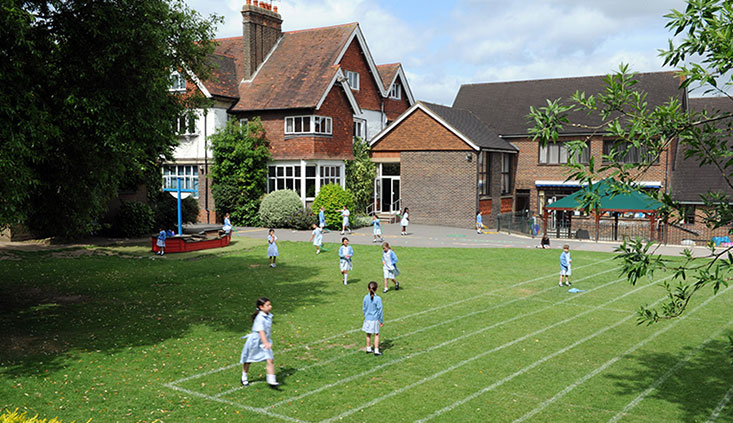
At St Hilda's we offer increasing specialist teaching from Year 3 onwards, fantastic facilities including a sports hall, swimming pool, science lab and excellent provision for those that need support. There is an exceptional learning environment within a safe and secure 4 acres of beautiful grounds.
Means Tested Bursaries are available for 4+ and 7+ pupils - details available from the Headmistress' P.A.
TOP
 
Q. How do I know that St Hilda's is the right school for my child?
A. Here, at St Hilda's, we aim to develop each child to their full potential both academically and socially. We expect and achieve high academic standards and at the same time offer a broad, stimulating and fully balanced curriculum. Children are treated as individuals and special talents are fostered and encouraged in small classes.
We pride ourselves in our happy and caring atmosphere and our fully committed staff and pupils, believing that our children thrive best in a positive, enthusiastic environment. We hope that our pupils develop, with us, an enthusiasm for learning which will last, beyond their school years, for life. We also aim to instil social awareness and a sense of responsibility at a very early age; respect for others and themselves, and high self-esteem. Do visit and judge for yourselves whether St Hilda's is the school for your child.

To receive a prospectus please click on the "Request a Prospectus" button at the top of the page.
TOP


Q. Is there an entrance examination and what are your entry criteria?
A.The main ages of entry are:

Kindergarten: the academic year in which the child is 3-4 years old.

Reception: the academic year in which the child is 4-5 years old.

Children for Kindergarten and Reception are offered places on the basis on Assessments, which are held in January/February for September entry and in October/November for January entry. Children for Reception class in September are not normally offered places in Kindergarten for April entry, but 3 years olds may enter then, if places are available, and will remain in Kindergarten in September.

Places may become available in Year 3 and entrance tests and interviews for these are held in January. The assessment for Year 3 consists of:
*Creative writing and drawing
*Comprehension
*Mathematics
*Reasoning Test

Entry into other academic years is only possible if places are available and is subject to satisfactory assessment and interview.

Means Tested Bursaries are available for 4+ and 7+ pupils and are awarded at the discretion of the Board of Governors in exceptional and deserving cases. Scholarships may be awarded in instances of exceptional academic talent. In both cases we require you to register with us first and then make a formal application in writing.

Scholarships and bursaries are usually reserved for children from Year 3 and above (7+).

For more information click on the " Admissions" link button.
TOP

Q. Where do girls go at the end of Year 6?
A. Most of our girls leave us to go to prestigious local independent senior schools or to high achieving state schools.
Each girl is different and has different educational needs, we pride ourselves on being able to match individual children with the school best suited to their talents and needs. We hold an annual forum which enables parents of girls in Form 5 to gather information and advice on choosing a suitable school for their child.

Click on our "Academic Results" button at the top of the page to see our latest school placements and offers.
TOP


Q. What extra-curricular activities are available
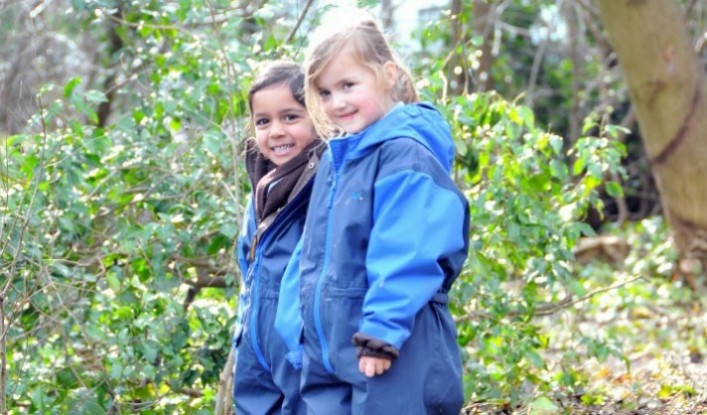
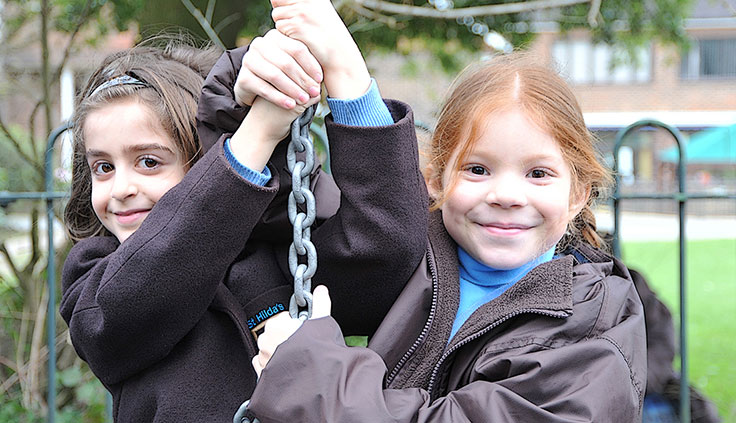
A.Many extra-curricular activities are available and include, Ballet, Tap,  Drama, Orchestra, Recorder Clubs, Athletics, Short Tennis and Netball.  Lunch-time activities include Computer Club, Guitar Group, String Group, Spanish Club and Choir. As well as our playground we have a lovely garden area, a special 'anti-bump' playground, The Spinney (a small woodland) and a tennis/netball court. Kindergarten have the option of playing on their own patio - especially when they are new to the school!
TOP


Q. Do you cater for children with special needs?
A. All the children's progress is monitored closely and we would advise you if we felt that your daughter would benefit from additional curricular support from our specialist teachers. The SENCo (Special Education Needs Co-ordinator) of the whole School has overall charge of any learning support that your child might need. All staff at St Hilda's are aware of the issues surrounding Learning Support and are skilled at delivering lessons in the most effective way for their pupils. We also cater for children for whom English is an additional language.

St Hilda's  School aims to be responsive to all aspects of diversity and to increase the learning and participation of all pupils within the school and its locality. We are developing inclusive values which are shared between all staff, pupils, governors, parents/carers and the wider community, in a secure, accepting, collaborative and stimulating environment. Everyone is valued and diversity is seen as a rich resource to enhance and support the learning of all.

This inclusive culture is reflected in all school policies and practices. We ensure that classroom and extra-curricular activities encourage the participation of all pupils, drawing on their knowledge and experience outside school. Teaching and support are integrated together, enabling all pupils to overcome barriers to learning and participate fully in school life.

Inclusion will be achieved through analysis and assessment of children's needs, by monitoring the quality of teaching and the standards of pupils' achievements and by setting targets for improvement. Learning for all children is given equal priority and available resources are used to maximum effect.

All children, including those who have been identified as more able/gifted and talented will be given opportunities within lessons and through extra curricular activities to use and develop their gifts and talents. These opportunities will be provided in accordance with the More Able Policy

TOP

 
Q. Does she have to have school lunches?
A. School lunches are compulsory for all children, they are cooked on the premises and include a daily choice of hot main course, a vegetarian hot main course and assorted salads. From time to time, ‘themed’ lunches are arranged. We encourage the girls to eat a well-balanced and varied diet. Packed lunches are supplied for most school trips. 

See "Links" for the latest menu 

Q. Will my daughter be able to learn a second foreign language?
A. All girls learn French from Reception to Form 6, and Latin starting from Form 4. We also have an extra-curricular Spanish Club. For the older girls we also offer a four day residential trip to France.
TOP


Q. What are the times of the school day?
A. School is open from 8.a.m. All girls go to their classrooms at 8.30a.m., and so
they need to arrive by this time.

School is open from... 8.00am
Registration in Form Rooms... 8.40am
Lessons begin... 8.45am
Kindergarten morning ends... 11.50am
Day ends for K.G /Reception Form1/Form2... 3.20pm
Day ends for Forms 5&6  Monday to Thursday... 3.50pm
Day ends for Forms 5&6  Friday... 3.35pm

Lower School children, not collected by 3.35pm, are taken to After School Care
TOP

Q. What are your before and after school arrangements?
A. If girls need to arrive between 8.00am - 8.30 am they are able to come into the dining room which has a supervising staff member.  In the summer and in good weather the girls stay in the garden under supervision until 8.30am.
After School Care is by written arrangement and pre-booking. In After School Care tea is provided and there are facilities for homework and play for the children in the care of qualified supervisors, from 3.30pm to 6pm (Kindergarten and Reception 3.30pm to 5.30pm).
TOP

Q. When can we visit the School?
A. We hold open mornings several times a year but if you wish to visit us at another time we can make an appointment that is convenient for you. Mrs L Cavanagh, the Headmistress, is pleased to talk to prospective parents and show them around School.  Tel 020 8950 1751

 For details of forthcoming Open Days click on the "Open Days" button at the top of the page.
TOP

Q. Is there a PTA and how do I join?
A.  We have a thriving, active PTA who stage many events throughout the year. All parents are automatic members when their child starts at St Hilda's. 

For information about the PTA click on the links button.
TOP


Q. Who are the School's outfitters?
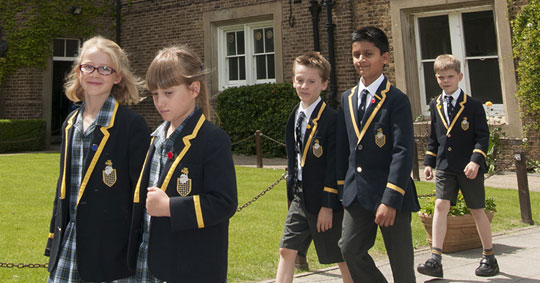
A. All children wear school uniform from Kindergarten to Form 6. Second hand uniform is available in school.
Uniform is available from :
DJ Uniforms
45 High Street
Bushey
Herts
WD23 1BD
Telephone: 0208-421-9488

For more information click on the links button "Uniform"
TOP

Q. What is your policy on bullying?
A. At St Hilda's we take the issue of bullying very seriously. We believe that it is unacceptable in whatever form and should be reported immediately to a member of staff so that it can be dealt with promptly and effectively.
Click on the link to view our Anti-Bullying Policy
TOP

Q. Do you have a child protection policy?
A. We follow the child protection guidelines laid down by Hertfordshire County Council, and have members of staff trained in child protection.
Click on the link to view our Safeguarding & Welfare of Children Policy + Anti-bullying Policy
TOP

Q. Is information about my child secure?
A. Early Years Settings, Schools, Local Authorities (LAs), the Secretary of State for Education and the Department for Education and Skills (DfES), the government department which deals with education and children's services, the Qualifications and Curriculum Authority (QCA), Her Majesty's Chief Inspector for Schools and the Office for Standards in Education (Ofsted), and the National Assessment Agency (NAA) all process information on children and pupils in order to help administer education and children's services and in doing so have to comply with the Data Protection Act 1998. This means, among other things, that the data held about children must only be used for specific purposes allowed by law. This statement is to tell you about the types of data held, why that data is held, and to whom it may be passed on.
TOP


These are some of the most frequently asked questions about St Hilda's, if you have one that is not in our list please contact us directly for the answer.